What is digital marketing?
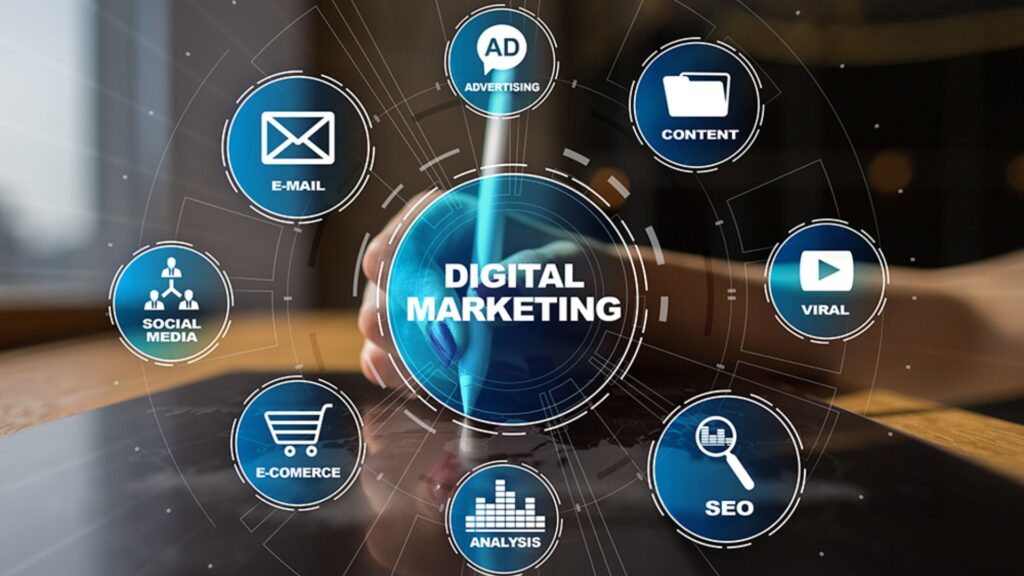
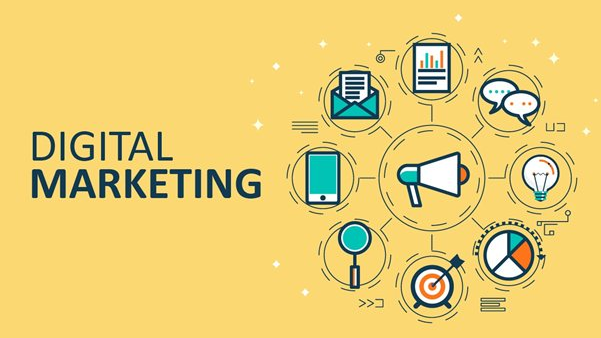
Digital marketing refers to the creation and dissemination of content through digital media channels—websites, landing pages, social media, email, and mobile applications—and the promotion of that content using a variety of strategies across paid, earned, and owned digital channels, including SEO, SEM, pay-per-click (PPC) advertising, content syndication, social, email, text, and more.
Importance of digital marketing
Digital marketing strategies help marketers define goals, target an audience, and develop a digital marketing plan that best reaches that audience. These strategies provide direction for a given campaign or program and a framework for evaluating outcomes.
Today, everything is digital, and digital marketing has been integrated into almost every aspect of business, fundamentally changing how companies communicate with and deliver value to customers.
So if your business cannot implement and execute a digital marketing strategy in an increasingly growing, global online marketplace, you simply will not be able to compete.
Learn How Digital Marketing Efforts Drive Business Success in the Modern World
Marketing is the practice of identifying and satisfying customer needs. This is a particularly important task in the business context, as successful marketing efforts can drive leads and conversions. Even though marketing has deep roots in business history and culture, digital marketing is a newer and evolving practice.
Fast forward to the present and digital marketing is as important, if not more so, than traditional marketing methods. Depending on the business there is a growing divide between traditional and digital marketing, while others have found novel ways of bringing the two closer together. Regardless of the approach, it is vital for businesses to plan and execute a viable digital marketing strategy.
It is true that every business has unique needs and goals. Correspondingly, the creation and implementation of a digital marketing strategy will change from business to business. But in common practice, many businesses employ a similar process for creating and implementing a digital marketing strategy, as outlined below.
- Global Reach — Unlike traditional methods, digital marketing is not necessarily bound to a specific geographic area. The internet is available to customers across the globe. This allows businesses to market and sell to customers who live in a different state or country, removing many traditional barriers to entry.
- Low Cost of Entry — To achieve the global reach of digital marketing through traditional channels, there would be a serious price tag attached. On the other hand, certain aspects of digital marketing can be achieved with a small investment of time and resources. For example, even small or startup businesses can create a website, manage social media and publish blogs without breaking the bank.
- Measurable ROI — In order to maximize profits, businesses must carefully evaluate return on investment (ROI). With traditional marketing, ROI can be difficult, sometimes impossible, to measure. On the other hand, digital marketing provides real-time visibility into the effectiveness of each campaign, enabling business leaders to make well-informed decisions to drive revenue and increase profit.
- Improved Targeting — Digital marketing allows businesses to target very specific demographics of potential customers. By engaging customers in a particular geography, industry or social channel, businesses have a much better chance of reaching their target demographic.
- Dynamic Adaptability — Digital marketing strategies are extremely malleable and flexible, enabling businesses to adjust course when needed. Unlike long-term, traditional marketing campaigns, businesses can adjust their digital efforts on the fly, enabling quick pivots when necessary to realize commercial opportunity.
- Immediate Connection — Before making a purchase, modern customers generally conduct online research and evaluate reviews. The first step in this process typically starts with a search engine. In this way, businesses with developed SEO, SEM and PPC strategies can connect immediately with customers.
- Relationship Building — The rise of social media has turned it into a dominant communications platform for many customer demographics. Furthermore, customers increasingly want to interact with businesses on their terms and on their preferred platform. As a result, businesses that engage in effective SMM practices can build longtime and loyal relationships with current and prospective customers.
Overall, businesses of every shape and size can achieve powerful benefits through effective use of digital marketing methods. Furthermore, the cost of digital marketing can be tailored to each specific business, stripping many barriers to entry of traditional methods. With so many benefits available for just about any budget, it makes sense why so many businesses are succeeding with digital marketing efforts.